Skip to content

A mix without edge or limit”: Peter Culley’s Hammertown


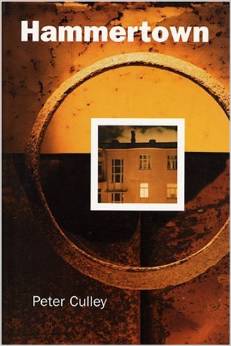
hammertownReposting this old Poetry Project Newsletter review of Peter Culley’s Hammertown. One of my favorite poets, he’s also a favorite reviewer — his review of Clark Coolidge’s Far Out West, for example, has always really done it for me, packing more references into less space than almost anything else, ever (to say nothing of the ongoing catablogging of Culley’s favorite stuff over at Mosses).

*

His playing is beyond what I could say about it.”

—John Coltrane on Paul “Mr. P.C.” Chambers

Probably intended for dance tunes or with dance tunes in mind.”

—Louis Zukofsky on John Skelton’s “To Mistress Margaret Hussey”

Presented in three sections of six poems each, Peter Culley’s Hammertown is experimental at its core — check the particle-accelerator serial mash of “Snake Eyes” — and, strangely, beautifully, classical on either wing of the triptych (or gatefold LP cover), as the poet deftly mixes modes and methods — a sustained lyricism shot through with riffs epistolary, pastoral, elegiac; leavened with sincere homage; ventilated by epic-ironic gestures. And then there are complete surprises, such as the doses of “tumbling verse” à la Skelton; Culley’s rhymes and snapped lines, written “with dance tunes in mind,” help leash the poems enough to keep their wilder energies from spinning the work off into space while nudging what can be a very dark book towards the light.  There is nothing emptily virtuosic in Culley’s polyverse; on the contrary, I repeatedly felt the thrill of the new while plunging into “a mix without edge or limit” and, just as often and importantly, the satisfaction of frequent enough snatches of “an air familiar” to keep from losing too many wits to bear witness.

(Continued)

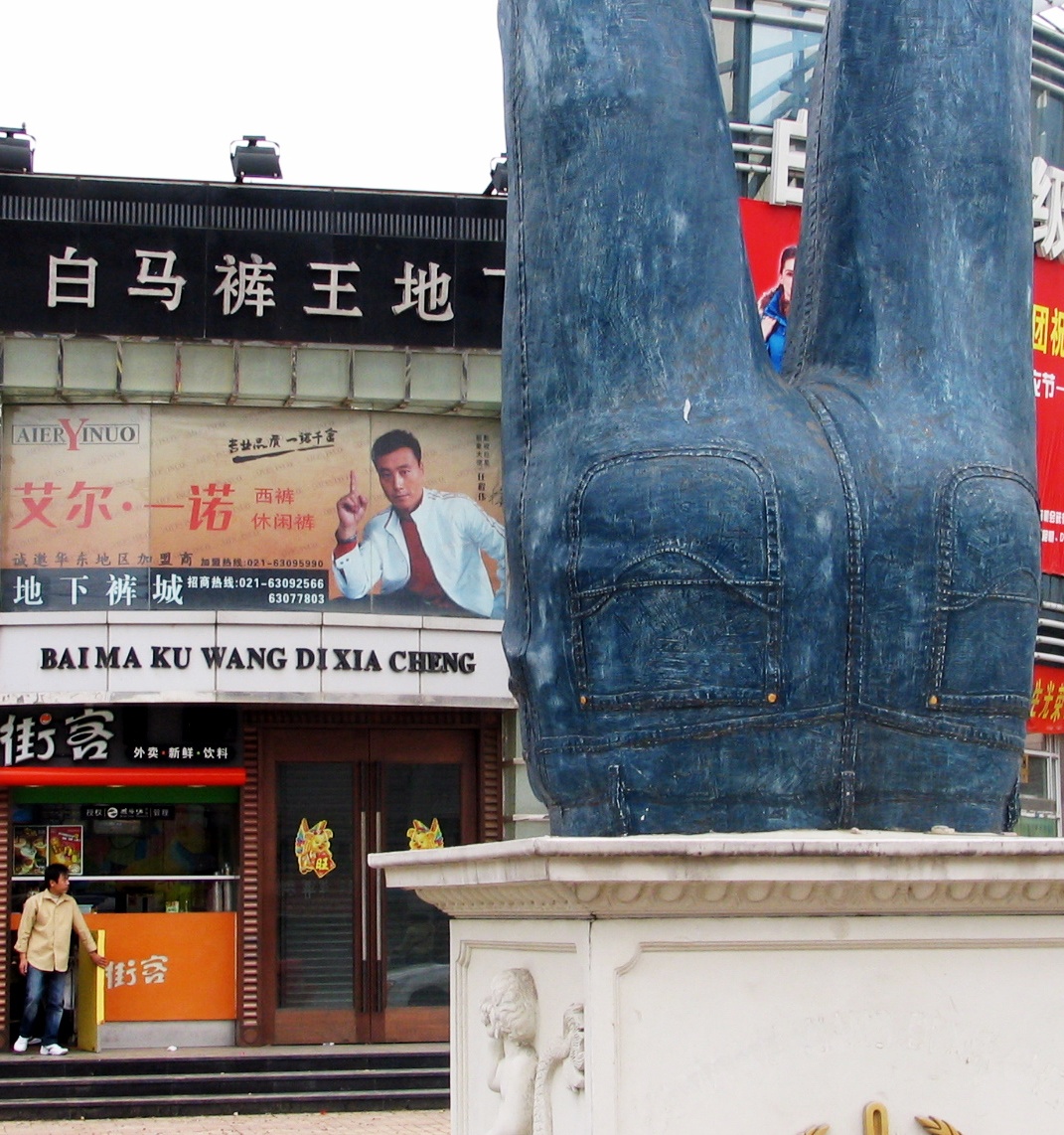
Monkey King Screen Test

Not a second
or you’ll stop, the
primacy of an event
depends on its having been
for so many the mistakes
all blending into one
common take from all
the others spinning off
eyes in the generator
sun oil pools in
the sky reflected
and like as actors
we agree: COSTUME!
ripples generally
we all take photos
with our phones
of all we see
xiaojie vs. bao’an
chemical peel ads
roads asunder
capitalist ass
socialist tits
harmonycock
a tariff farmer
a mixed martial arts champ
and a woman flattened
by cement truck snap!

______________

One in a series of dailies writ­ten at head-speed en route to the office on Shanghai’s 10 Line, usu­ally some­where between the Shang­hai Library and the Hongqiao Lu stops around 8:30 in the morn­ing or so. (Though this one was written in the office.) Some­times I’ll post them here. 

The name of the series is TOWERS.

LOST WOLF

Lost Wolf | Photo by David Perry

Watching the watchers watch you watching…

Wu Meng's "Gravity" at OV Gallery, Shanghai

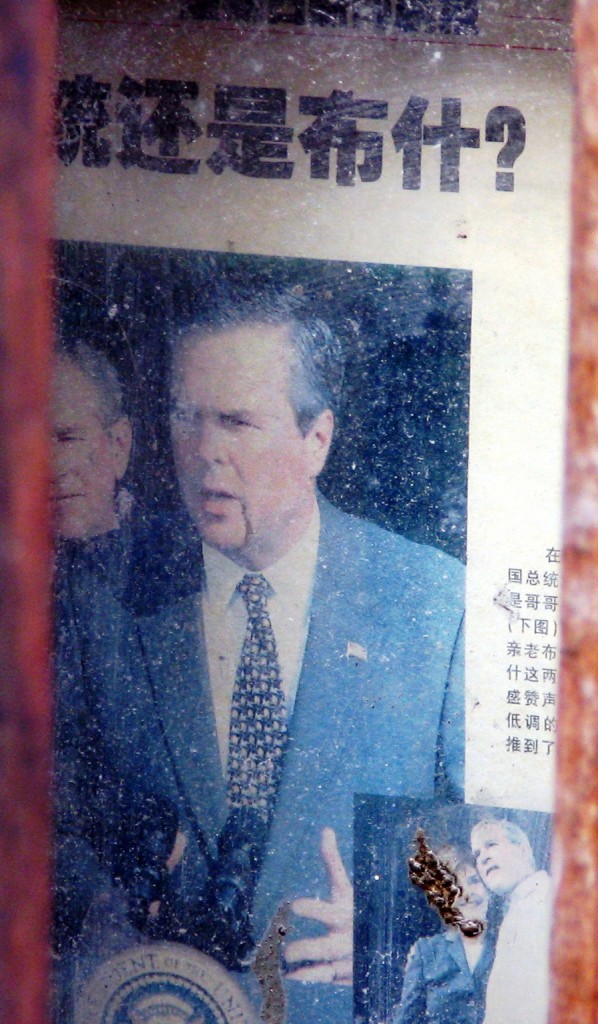
The not-so-discreet charm of the cultural bureaucracy: Everyone’s a critic, especially this plainclothes note-taker. His opinion? Censored.

It’s not often that I’m able to write something for my current corporate day job that I really like. But along with the travel guide copy and any and all other conceivable copy writing and editing needs an enormous Chinese travel company with a rapidly growing English-language website might require, my colleagues and I are blogging a bit on the China experience in a fairly personal vein.

Of all I’ve done to date for the travel site, this feels the best and most honest: Catch as Catch Can: Beating the Man to Shanghai’s Most Wanted Art. It was published months ago, before the larger crackdown that has seen Ai Weiwei disappeared – along with a slew of Chinese intellectuals, activists, lawyers, artists and good church-going folk – had taken shape (it was also before my mobile phone received a strange series of calls).

It’s as much about the strangeness not only of being in such a situation, but having chosen to be so in a crucial sense.

The opening paragraphs:

A Shanghai art gallery runs afoul of the local Culture Bureau, and we reflect on the fact that artists and curators in China run real risks every time they push the envelope. For art-curious foreigners, ham-handed government interventions in the arts may be in turns annoying, amusing, or plain befuddling. For the artists and galleries involved, however, it’s serious business.… » 

Though many would deny it, for most first-time Western visitors to China — especially Americans, I suspect — part of the allure is the thrill of being watched. A light bout of paranoia puts an edge on things, and imagining that you’re somehow important enough to bear watching can flatter the ego and create an easy sense of drama.

(Continued)

European Airfields

Shanghai condemned lane house | Photo by David Perry A cold air fire
Jenson is a name
meaning SON OF JEN
we are architecturally
accelerated it’s
retarded growth
for a full five
quarters in just one
day a report
sharpshooters up
in Misrata
the news is of a man
alone against meddling
in the internal affairs
of any news at all
aside from long
longing shots of planes 
launching from carriers 
lifting off from those
European airfields 
an exercise daily 
as tai chi or checkers 
and half a pack 
of cigarettes 
in the pocket 
park’s retired comrades,
guards, granny chatter

______________

One in a series of dailies written at head-speed en route to the office on Shanghai’s 10 Line, usually somewhere between the Shanghai Library and the Hongqiao Lu stops around 8:30 in the morning or so. Sometimes I’ll post them here. The name of the series is Towers.

When to hit, split or stay”: Blackjack players rally ’round Ai Weiwei

On, yes, blackjackchamp.com. Of course.

There’s also a NY Times article, so it seems to be real — as real as Mr. Snake Eyes.

No April 1 dateline.

Truth, fiction, stranger.

Interesting times about a billion.

A billion Onions, blazing in the midday sky.

Something like this.

Anyway, an excerpt:

Throughout the 1980s Ai WeiWei lived in an unfurnished apartment at the Lower East Side of Manhattan, yet every few days a full stretch limo picked him up for the drive to the casino. Since he was a rated blackjack card games player, he had full comps at practically every casino in Atlantic City: with free suites, limos, dinners and every other perk at his disposal. Due to his open personality and great skills he got to know many blackjack players from across the United States

He showed me once those things he makes. I don’t get art, but he never talked much about anything but blackjack, card counting systems, girls and casinos with me. He is a good guy. They better let him out,” Mr. Snake Eyes explains before returning to his table.

I’d say it can’t be made up, but I really just don’t know anymore.

Best of all:

There are currently talks between multiple casino insiders to hold a series of fund raising blackjack and poker tournaments to lobby the US government to impose trade restrictions against China unless Mr. Ai WeiWei is released.


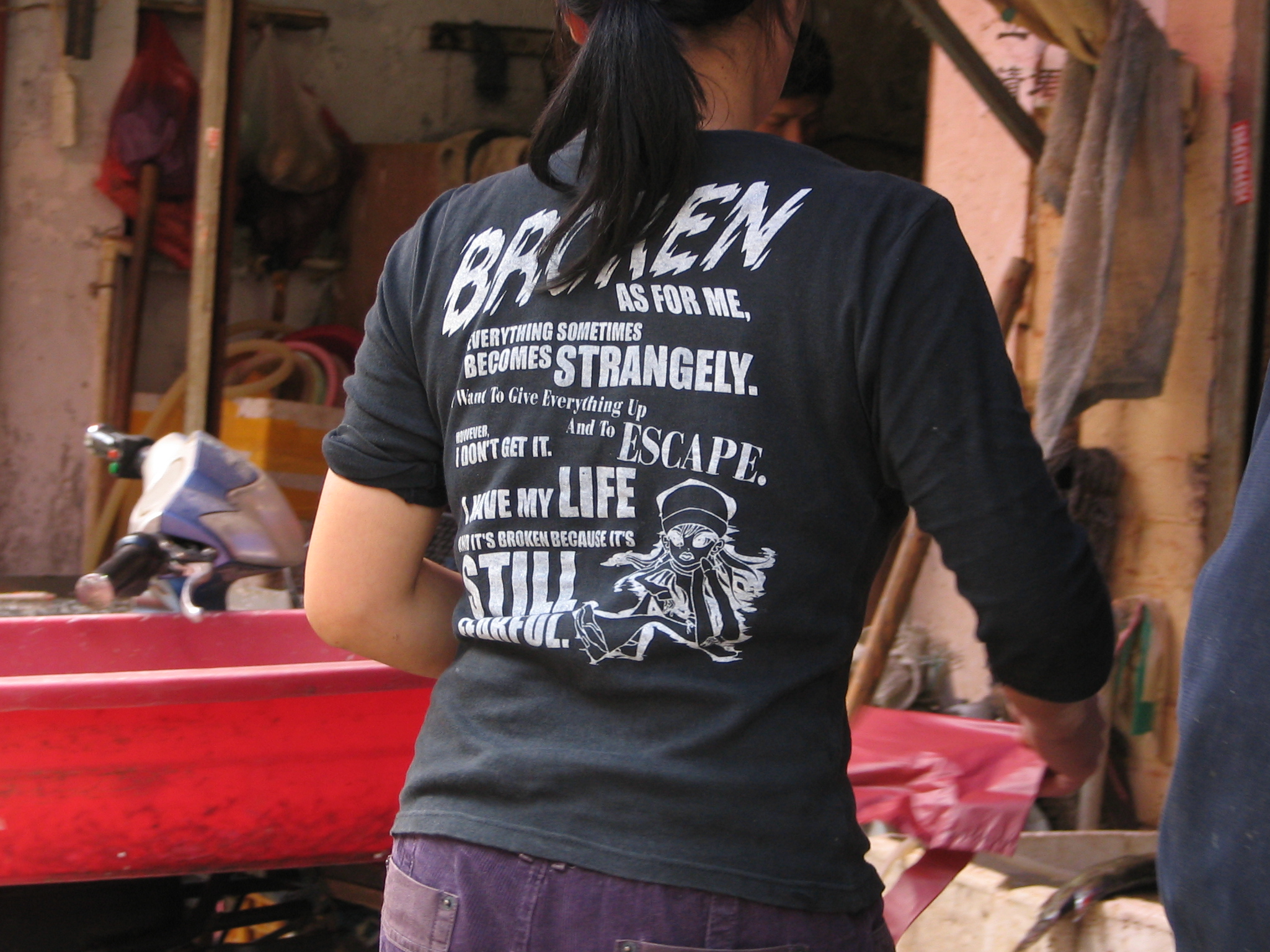
EVERYTHING SOMETIMES BECOMES STRANGELY.

Photo by David Perry

Chapbooks in the Cloud, Part 2: Knowledge Follows (Insurance Editions, 2003)

Knowledge Follows by David Perry (Insurance Editions, 2003)

Knowledge Follows, Insurance Editions 2003. Click image to download or browser-load PDF (8.1 MB)

Published in 2003 by Kostas Anagnopolous’ Insurance Editions, Knowledge Follows was one of three chapbooks featured in the first set of Insurance Editions; the other two were Carol Samotovicz’s Reticular Popups and Kostas’ own Daydream.

Marc Kuykendal letterpressed the covers for the first batch of Insurance Editions, and Diane Shaw of goodesign designed the cover and interior and set the type (AIGA Design Archives replicates the colophon here along with images of all three first-run chapbooks).

I put Knowledge Follows together in the wake of both a 2001 trip to Chiapas, Mexico and 9/11, which took place while I was in Mexico on several months’ hiatus from life in Brooklyn.

Noah Eli Gordon wrote in his “Considering Chapbooks” column for Jacket:

Part peripatetic, subtle, yet quite cerebral, complexity, part humorous, and anecdote-laden travelogue, part meditation on place, simultaneously of the text and the empirical world, David Perry’s Knowledge Follows is an all together dynamic assemblage of precisely deployed, lineated stanzas, interspersed with bits of narrative prose. Loosely documenting a trip to Chiapas (in Mexico), though in the more Objectivist sense of specificity of focus, Perry’s dexterous and attentive writing renders time itself an almost palpable entity.…

And Ron Silliman wrote the following after the first sections of Knowledge Follows appeared in the short-lived Seattle magazine Monkey Puzzle (Kreg Hasegawa and Daniel Comiskey, eds.): (Continued)